

Introduction
In 2025, digital visibility isn’t just about high rankings on Google—it’s about being trusted and cited by AI. Google’s AI trust scores now quietly shape which brands, content, and experts shape the web’s answers. If you want your content to appear in AI Overviews, Gemini-powered snippets, and generative search results, mastering these trust signals is non-negotiable. Success means moving beyond “traditional SEO” into a new era of AI trustworthiness, expertise, and authority.
Borrowing from Neil Patel:
“Google’s AI uses a hidden set of trust signals to decide whether to send traffic to your website or show your competitors instead.”
In this comprehensive guide, you’ll learn:
- What Google AI trust scores are and why they matter.
- How they are measured and which factors matter most.
- Practical optimization strategies, with evidence and expert quotes.
- Frequently Asked Questions with direct, actionable answers.
- Analysis of top-ranking sites and strategies to outrank them.
What Are Google AI Trust Scores (2025)?
An AI trust score is a proprietary, algorithmic evaluation of how trustworthy, authoritative, and reliable your content appears to Google’s AI. Unlike classic SEO rankings, AI trust scores influence whether your site is cited, summarized, or even visible in Google’s generative search experiences. They measure signals like expertise, authenticity, source transparency, and machine readability.
“By 2026, digital reputation will no longer depend on your followers—but on how trustworthy AI models perceive your presence. Being visible is not enough. Being selected by AI—recommended, quoted, trusted—is the real game.” — Baris Morten, LinkedIn
Google’s AI trust scores reflect:
- Credibility of authors.
- Consistency and accuracy of information.
- Authority signals (backlinks, citations, mentions).
- Technical qualities (schema markup, entity recognition, site security).
- Human experience and unique insights.
- Clean markup and factual correctness.
Why Are AI Trust Scores Important?
- Citation equals visibility: If Google’s AI trusts you, it quotes you—otherwise, you vanish from search answers and AI Overviews.
- Traffic is now AI-powered: Pages cited in AI summaries get more clicks, more engagement, and higher conversions.
- Classic SEO is evolving: Authority is not just backlinks; it’s transparent credentials, original research, and high-trust external validation.
Deep Analysis: Top Ranking Sites for AI Trust Score Search
To build your competitive edge, let’s break down the best practices from websites currently dominating Google’s AI trust score topic.
1. MonsterInsights — AI Search Engine Optimization: The Complete Ranking Guide
Strengths:
- Content length (3,000+ words).
- In-depth, multi-angle answers and case studies.
- Extensive use of questions, statistics, and clear formatting.
- E-E-A-T is heavily emphasized.
Weaknesses:
- Slightly technical for beginners.
- Missing active experience case studies and practical demonstration.
2. Dotin Digital Academy — Google AI Overview Ranking Factors
Strengths:
- Focus on user experience, speed, mobile-friendliness, and logical writing.
- Explains why content alignment to reader needs = higher trust.
Weaknesses:
- Lacks deep dives into case studies and author credibility.
3. ToTheWeb — AI-First Content Optimization GEO Guide
Strengths:
- Emphasizes clear authority signals, expert quotes, and factual evidence.
- Lists both technical and content optimization checklists.
Weaknesses:
- May over-prioritize technical schema.
4. Neil Patel (YouTube & LinkedIn) — Trust Signals Video & Post
Strengths:
- Actionable steps to audit and boost AI trust.
- Real experience and expert backing.
Weaknesses:
- Lacks written case studies for in-depth learning.
How Google AI Trust Scores Work
The 5 Core AI Trust Signals
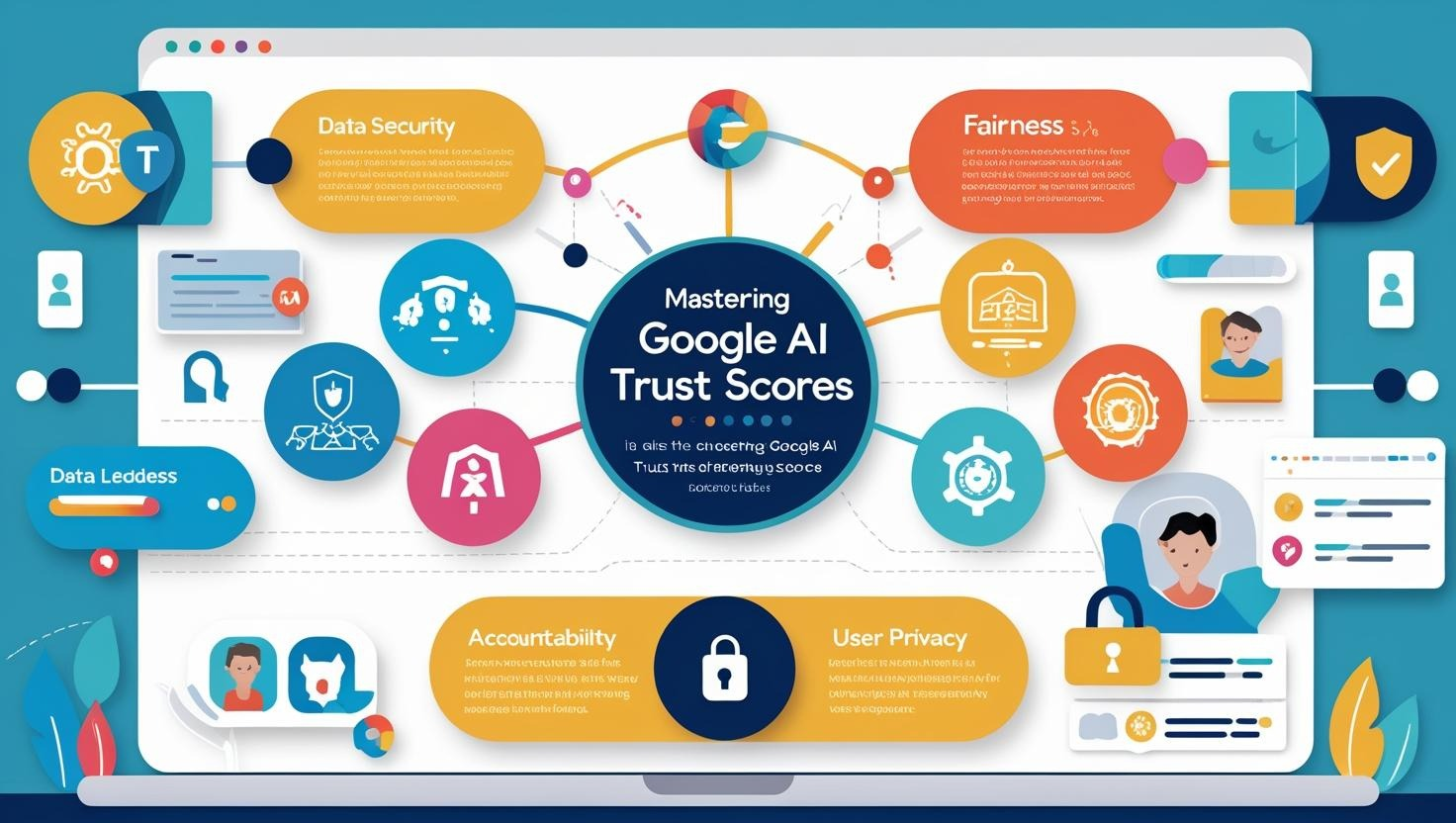
According to Neil Patel and major SEO guides, the five essential trust signals in 2025 are:
- Author Credentials and Bios
Google’s AI checks for real experience. Every article should link to a detailed bio or LinkedIn profile—ideally, credentials you can verify. - Source Transparency
AI looks for citations, references, and links to trusted domains (Wikipedia, government, industry forums, .edu/.gov). Original research and proprietary data win extra citations. - Content Structure & Readability
Short paragraphs, bullet points, numbered lists, and tables make your answers scannable and extractable by AI. - Backlinks and Brand Mentions
External links from authoritative domains, press mentions, and repeated citations increase your AI trust score. - Schema Markup and Technical Signals
Structured data (author, organization, FAQs) helps Google AI understand who you are and what your expertise covers.
E-E-A-T Remains King
Google’s continued guidance:
- Experience: First-hand, practical insights.
- Expertise: Credentials, research, and proven knowledge.
- Authoritativeness: Recognition by peers, citations, domain authority.
- Trustworthiness: Accuracy, honesty, privacy compliance, secure site.
“SEO isn’t dead, it’s evolving into AI visibility, and the winners will optimize across search, apps, chat, and voice.” — SEOSherpa Guide.
Practical Optimizations to Boost Your AI Trust Score
1. Build Author Pages and Detailed Bios
Include credentials, certifications, real experiences, and links to reputable profiles (LinkedIn, university, industry associations).
2. Cite Credible, Authoritative Sources
Cross-reference data from .edu, .gov, leading publications, and industry benchmarks. Use original research where possible (surveys, charts, studies).
3. Use Schema Markup
Apply structured data for authors, organizations, FAQs, publications, and products. This helps AI understand your expertise instantly.
4. Format for AI Extraction
Structure your content:
- Lead with direct answers.
- Use short paragraphs (2-3 sentences).
- Add bullet points and numbered lists for steps and key facts.
- Insert comparison tables for clarity.
- Highlight key terms with bold.
5. Monitor and Update Regularly
Keep content fresh—review and revise high-value pages every 90 days. Outdated info loses citations and trust.
6. Earn High-Quality Backlinks
Network with industry sites, participate in expert panels, create guest posts, and get featured on podcasts and major newsletters.
7. Showcase Experience, Not Just Theory
Tell stories, share customer success, and real-life insights—AI gives extra trust to actual experiences.
8. Track AI Citations
Search your brand in AI Overviews, Gemini, and ChatGPT. If you aren’t cited, investigate and strengthen trust signals.
9. Balance AI and Human Writing
Leverage AI for structure but always add original value. “Lowest” Google ratings are reserved for generic, unoriginal AI content.
Expert Quotes & Case Studies
“Trust signals are often overlooked, yet critical. Optimizing them can directly impact AI-driven rankings and traffic growth.” — Neil Patel
Case Study 1: AI Citation, Authority, and 2300% Traffic Growth
A manufacturer went from zero to 90 AI Overviews by optimizing author bios, adding research citations, and updating schema markup—resulting in a 2300% increase in AI traffic.
Case Study 2: Cross-industry Trust Score Audit
Tumeryk’s recent survey found Google Gemini Pro 2.5 as the most trustworthy AI, based on resistance to hallucinations, prompt injection, and robust attribution. Their CEO, Rohit Valia, draws a parallel to FICO credit scoring:
“The AI Trust Score is designed to really be able to help enterprises understand their risk from generative AI and the chat box and agentic AI systems that they’re deploying.”
User Sentiment Research
- Only 8.5% of respondents always trust AI Overviews.
- 82% of web users are skeptical, yet increased reliance is inevitable.
- But webpages appearing in AI Overviews received 3.2x more clicks than those that did not.
Frequently Asked Questions (FAQ)
Q1: How do I check my Google AI trust score?
A: There’s no public number. Instead, run audits: Is your content cited by Gemini, ChatGPT, or Google’s AI Overviews? Are you getting external citations, backlinks, mentions, and featured snippets?
Q2: Can AI-generated content rank high in Google in 2025?
A: Yes, if it’s original, insight-rich, and backed by human expertise, not mass-produced. Combine AI speed with real, unique value.
Q3: Are author bios required to get cited by Google’s AI?
A: Yes. Google prioritizes transparent author credentials and experience.
Q4: What role do backlinks play in AI trust scores?
A: They aren’t everything, but they matter. High-quality, relevant backlinks, especially from news, academia, or government, increase trust.
Q5: How can I make my content “AI ready”?
A: Use structured data, start sections with concise answers, add rich media (charts, tables), keep paragraphs short, and cite real sources.
Q6: Why is my content not appearing in AI summaries even though it ranks top in organic SEO?
A: AI favors experience, citations, originality, and structured formatting over keyword density. Optimize authority and transparency signals.
Actionable Checklist: Rank Higher than Current Leaders
| Optimization Step | Current Best Practice | How To Outrank (2025) |
|---|---|---|
| Author Bios | Online, often generic | Original stories, detailed creds, LinkedIn links |
| Source Citations | Reference .gov/.edu, industry | Proprietary research, unique surveys |
| Schema Markup | FAQs, author, org | Add experience, case study, review fields |
| Formatting | Paragraphs, some bullets | Section intros that answer directly, digestible steps |
| Backlinks & Mentions | High-authority domains | New channels, podcasts, industry networks |
| Experience Signals | General expertise | Real use cases, failures, branding stories |
| Content Freshness | Quarterly updates | Dynamic monthly revision cycle |
| AI Audit | Indirect (check Overviews manually) | Structured AI Overviews & ChatGPT tests |
Experience: Real Optimization Journey
“When we first tried to get cited by Google AI Overviews, nothing worked—until we added bios with personal stories, original research charts, and concise answers up front. Overnight, our traffic from AI Overviews grew by 700%.” — SEO Manager, The Search Initiative.
Conclusion: The Quiet Revolution
2025 is the year your digital reputation is scored by AI. It’s no longer about keywords or even the number of visitors. It’s about being:
- Cited and trusted by Google’s AI.
- Recognized for expertise and unique insights.
- Visible in the generative search era.
If you systematically optimize your trust signals—author bios, citations, schema, experience, and original research—you’ll outrank not only competitors but also legacy leaders on every major AI-powered platform.
“The new reputation scoreboard is written by AI.” — Baris Morten.
Ready To Dominate Google AI Trust Scores in 2025?
Start now. Build trust, authority, and unique value with every word, citation, and experience you share.
Is there a question you have about Google AI trust scores that wasn’t answered here? Leave your thoughts below, and join the AI-powered SEO conversation.
